Appliance Lifespans and When Repair Beats Replacement
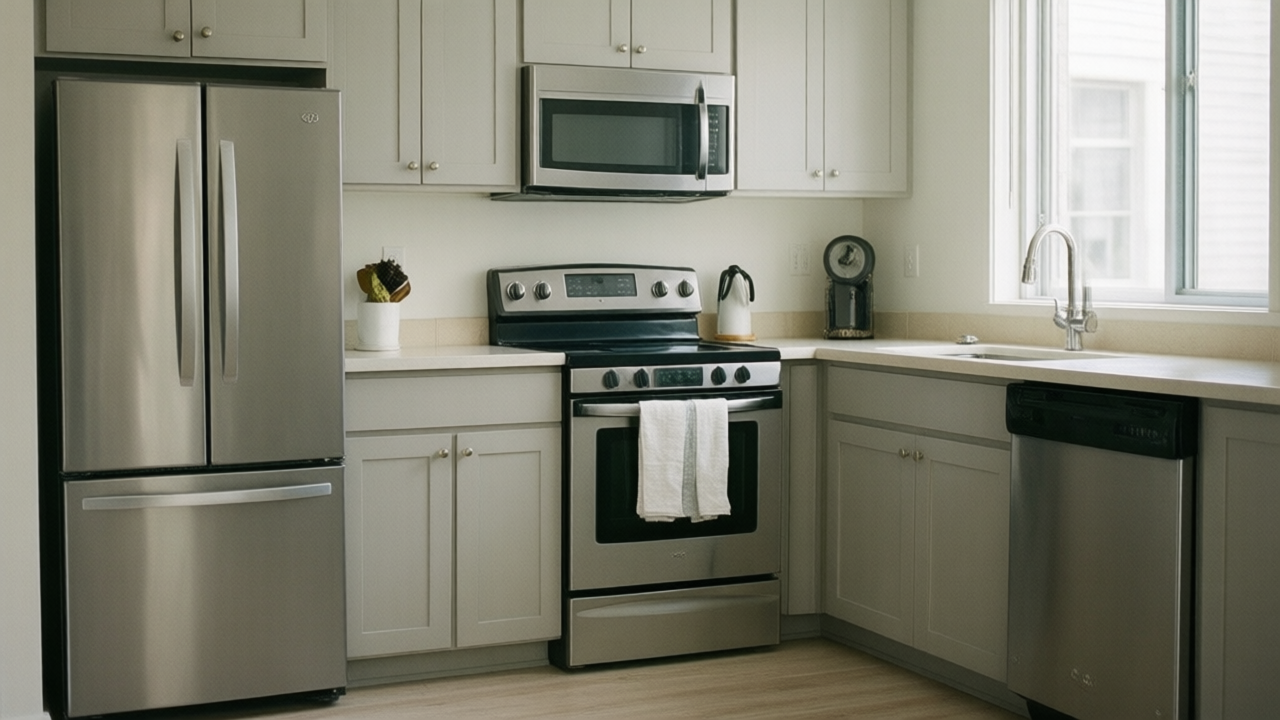
Every appliance eventually presents the same question, usually at an inconvenient moment. A few reference points make the decision much faster.
Rough service life expectations
These vary with use and maintenance, but serve as a baseline.
- Refrigerator. Roughly ten to fifteen years.
- Dishwasher. Roughly nine to twelve years.
- Clothes washer. Roughly ten to thirteen years.
- Clothes dryer. Roughly ten to thirteen years, often outlasting the washer.
- Range or oven. Gas ranges often reach fifteen years or more; electric somewhat less.
- Microwave. Roughly nine years.
- Garbage disposal. Roughly ten years.
- Water heater. Eight to twelve for tank, longer for tankless.
The percentage rule
A widely used guideline: if a repair costs more than half the price of a comparable new unit, replace it. Combine that with age. An appliance past three quarters of its expected life facing a significant repair is usually not worth fixing, because the next failure is close behind.
A useful refinement is cost per remaining year. A four hundred dollar repair on an appliance likely to last five more years is a reasonable annual cost. The same repair buying one more year is not.
Repairs usually worth making
Some failures are common, inexpensive, and restore a machine to full function.
- Dryer belts, thermal fuses, and heating elements, which are inexpensive parts and a frequent cause of the classic no-heat symptom
- Washer drain pumps and inlet valves
- Dishwasher spray arms, gaskets, and drain pumps
- Refrigerator door gaskets, thermostats, and defrost components
- Range igniters and burner elements
Notably, most no-heat dryer problems are inexpensive parts rather than a failed machine, which makes replacing a dryer for that symptom a common and avoidable mistake.
Repairs that usually signal the end
- Refrigerator compressor or sealed system failure. Frequently approaches the cost of replacement.
- Washer transmission or bearing failure, particularly on front-loading machines where the repair is labor-intensive.
- Cracked tubs or outer drums.
- Control board failures on older units, where boards are expensive and sometimes discontinued.
- Any repair on a machine already past its expected lifespan that has needed prior service.
Factors beyond the repair bill
- Efficiency. A refrigerator from two decades ago uses substantially more electricity than a current model, and that gap partially offsets replacement cost over time.
- Water use. Older washers and dishwashers use dramatically more water than modern equivalents.
- Parts availability. Manufacturers typically support parts for a limited period. Once parts become scarce, future repairs get harder regardless of today's decision.
- Timing. Replacing on your schedule is cheaper and less stressful than replacing during a failure, when selection narrows to what is in stock.
Getting more life out of what you have
- Clean refrigerator condenser coils annually. It is easy and it directly affects both efficiency and compressor longevity.
- Clean the dryer lint trap every load and the vent duct annually. Restricted venting is both a fire hazard and the leading cause of premature dryer failure.
- Do not overload washers, which is the primary cause of bearing and suspension wear.
- Run the dishwasher regularly, since seals dry out with disuse, and clean the filter if it has one.
- Level appliances properly. Vibration from an unlevel machine causes cumulative damage.
Before calling anyone
Check the simple things first: the outlet and breaker, whether the door latch engages, whether a filter or vent is clogged, whether a hose is kinked. A meaningful share of service calls resolve something the owner could have found in five minutes. Then look up the model number with the symptom, because common failures are well documented and you will often learn the likely part and its cost before the technician arrives.
Article Was Generated By AI.