Choosing Paint: Sheen, Quality, and Where Each Belongs
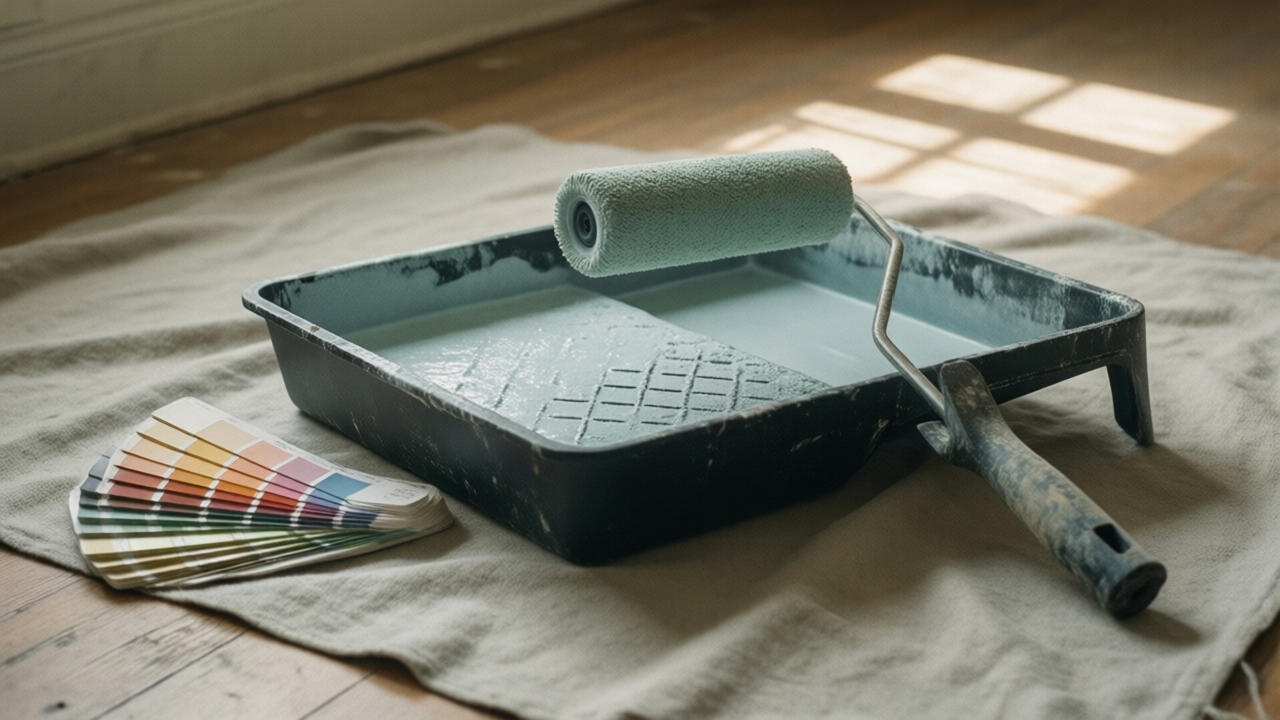
Paint is the highest-impact, lowest-cost change available to a homeowner, and the aisle is confusing in ways that are not accidental. Two decisions matter: quality and sheen.
What you actually pay for
The difference between inexpensive and premium paint is mostly the ratio of solids to liquid and the quality of the pigment and binder.
- Higher solids content means more material stays on the wall after drying, giving better coverage and a more durable film.
- Better pigment means true color and resistance to fading.
- Better binder determines washability and how well the film resists scuffing.
The practical consequence is coverage. A premium paint often covers in two coats where an inexpensive one needs three, which erases much of the price difference in labor and time. On a color change, especially over a dark color, that gap widens.
Sheen, from flat to gloss
Sheen describes how much light the dried film reflects, and it trades appearance against durability.
- Flat or matte hides surface imperfections best and is the most forgiving on older walls and ceilings. Historically hard to clean, though modern washable matte formulations have improved substantially.
- Eggshell has a slight softness to it and cleans reasonably. The common default for living areas.
- Satin cleans well and holds up in traffic. Good for hallways, kids' rooms, and family spaces.
- Semi-gloss is durable and moisture-resistant, standard for trim, doors, and bathrooms.
- Gloss is the most durable and the least forgiving, showing every flaw in the surface beneath. Usually reserved for accent pieces and cabinetry.
The general rule: the higher the sheen, the more durable and washable, and the more it advertises imperfections in the wall.
Room by room
- Living and bedrooms. Matte or eggshell. Low traffic, and hiding wall imperfections matters more than scrubbing.
- Kitchens and bathrooms. Satin or semi-gloss for moisture resistance and cleanability.
- Hallways, stairwells, kids' spaces. Satin, which survives hands and furniture.
- Trim and doors. Semi-gloss, both for durability and for definition against the wall.
- Ceilings. Flat, always. Any sheen on a ceiling reveals every roller mark and drywall seam under raking light.
Primer, and when it is unnecessary
Primer is not always required. Use it when:
- Painting over bare drywall, wood, or patched areas
- Making a dramatic color change, particularly light over dark
- Covering stains, smoke, or water marks, which need a stain-blocking primer specifically
- Painting over glossy surfaces, where adhesion is the concern
Repainting a similar color over a sound existing coat generally does not need it.
The tools change the result
Good paint applied with a cheap roller looks worse than mid-grade paint applied well. A quality roller cover holds more paint and sheds less lint. A good brush cuts a cleaner line and holds its shape. Both are reusable for years if cleaned properly.
Choose nap thickness to the surface: shorter for smooth walls, longer for texture.
Technique that avoids the common failures
- Cut in edges and roll while the cut-in is still wet, so the two blend rather than showing a picture-frame edge.
- Maintain a wet edge, working in manageable sections rather than letting an area dry partway.
- Do not overwork the paint. Roll it on, distribute it, then leave it alone. Continued rolling as it begins to set creates texture.
- Respect the recoat time on the can. Recoating too soon lifts the first coat.
Sampling properly
Color looks different at scale and under different light. Paint a large sample directly on the wall, or on a poster board that can be moved around, and look at it in morning light, afternoon light, and lamp light before committing. The color that looked right in the store will not necessarily be the color that looks right in the room.
Article Was Generated By AI.