HVAC Maintenance a Homeowner Can Actually Do
Heating and cooling equipment is among the most expensive systems in a house and among the most neglected. A modest amount of routine attention meaningfully extends its life.
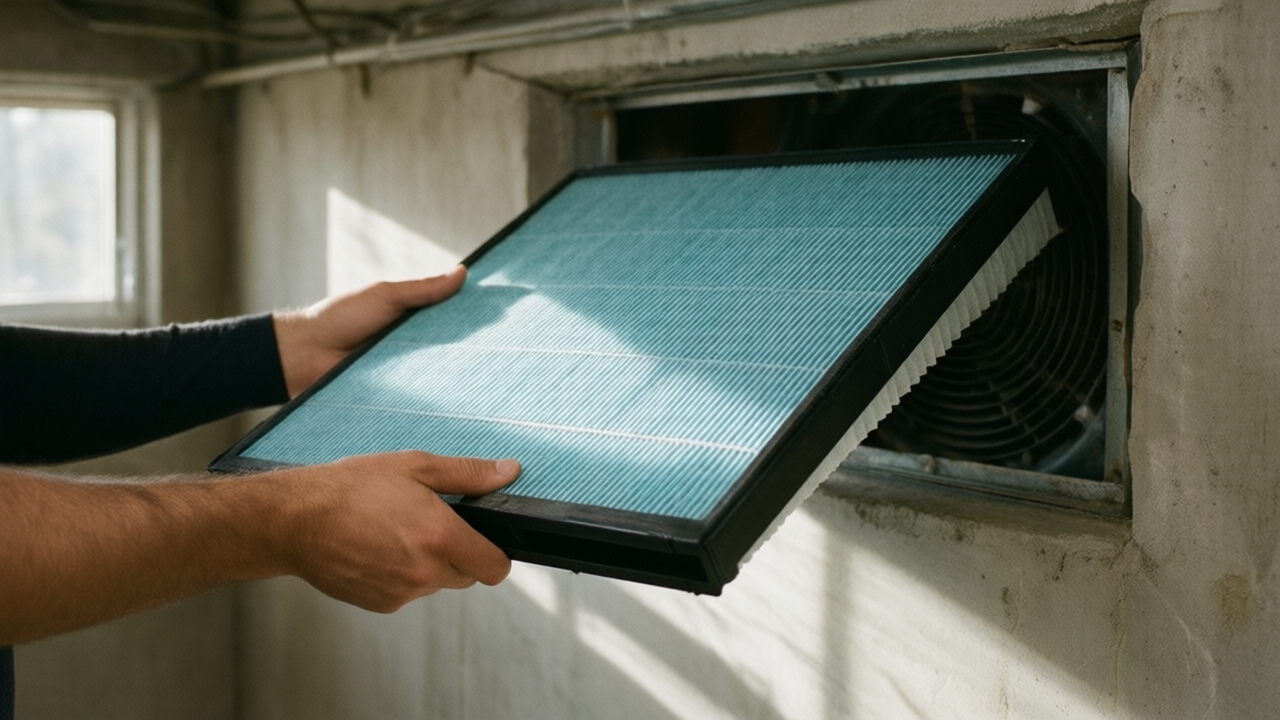
Filters are most of the job
A dirty filter restricts airflow, which makes the system work harder, run longer, and in extreme cases freeze the evaporator coil or overheat the furnace.
- Check monthly during heavy use and replace when it looks dirty rather than on a rigid schedule.
- Match the size exactly, including thickness, and note the airflow direction arrow.
- Higher filtration ratings capture more, but very restrictive filters can reduce airflow on systems not designed for them. Mid-range pleated filters suit most residential equipment well.
Seasonal outdoor work
The outdoor condenser unit needs air moving through it freely.
- Keep at least two feet of clearance on all sides and several feet above.
- Cut back vegetation and clear leaves and cottonwood fluff from the fins.
- With power off at the disconnect, rinse the fins gently from the inside out using a garden hose, never a pressure washer, which bends fins and causes lasting damage.
- Straighten bent fins carefully with a fin comb if a section is flattened.
Indoor tasks between visits
- Keep supply and return vents unblocked by furniture and rugs. Closing vents in unused rooms does not save money on most systems and can raise duct pressure in ways that hurt.
- Pour a cup of distilled vinegar down the condensate drain line periodically to discourage algae growth. A clogged condensate line is a very common cause of water damage near an indoor unit.
- Check that the condensate pan is dry during cooling season.
- Replace thermostat batteries annually if applicable.
- Listen for changes. New grinding, squealing, or short cycling is worth investigating before it becomes a failure.
What genuinely requires a technician
Some work needs instruments, certification, or both.
- Refrigerant. Checking charge requires gauges and training, and handling refrigerant is regulated. A system low on refrigerant has a leak, and simply adding more treats a symptom.
- Electrical components. Capacitors store dangerous charge even with power disconnected.
- Combustion inspection. Heat exchanger cracks and flue integrity are safety issues involving carbon monoxide, and require a professional.
- Airflow and duct testing. Diagnosing poor performance from duct problems requires measurement.
The value of a service visit
Two visits a year, one before cooling season and one before heating season, are the common recommendation, and the meaningful part is not the cleaning. It is measurement: refrigerant charge, temperature split, amp draw, combustion analysis. Those numbers catch a failing component before it strands you on the hottest or coldest day of the year.
Signs the system needs attention now
- Rooms that were comfortable becoming noticeably uneven
- Runtime increasing without a weather explanation
- A burning smell beyond the first heating cycle of the season
- Any hissing or bubbling sound, which can indicate a refrigerant leak
- Rising energy bills with unchanged habits
The long view
Equipment that is well maintained commonly lasts fifteen to twenty years. The same equipment with clogged filters, a buried condenser, and no professional attention often fails at ten. The difference is a filter habit and two service visits a year, which is a small cost against a large replacement.
Article Was Generated By AI.