Landscaping Choices That Cut Water Use and Maintenance
A yard is a recurring obligation. Choices made once at planting determine how many hours and how much water it demands every year afterward.
Start with what already grows there
The most durable landscapes work with local conditions rather than against them. Plants native or well adapted to a region evolved with its rainfall, soil, and temperature swings, so they need less irrigation, less fertilizer, and less intervention once established.
Observe the site before buying anything. Note which areas get full sun, which stay shaded, and where water collects after rain. Matching plants to those conditions prevents most future problems.
Group plants by water need
Placing thirsty and drought-tolerant plants on the same irrigation zone guarantees one group is wrong. Grouping by water requirement lets each zone run appropriately and is the single most effective irrigation decision.
Concentrate higher-water plantings near the house where they are seen and used, and let more distant areas transition to lower-water plantings.
Rethink lawn area
Turf is the most resource-intensive part of most yards, demanding regular water, mowing, and feeding. That does not mean eliminating it, since lawn is genuinely useful where children and pets play. It means sizing it to actual use.
Alternatives for areas that are looked at rather than walked on:
- Ground covers suited to the region, which spread and suppress weeds
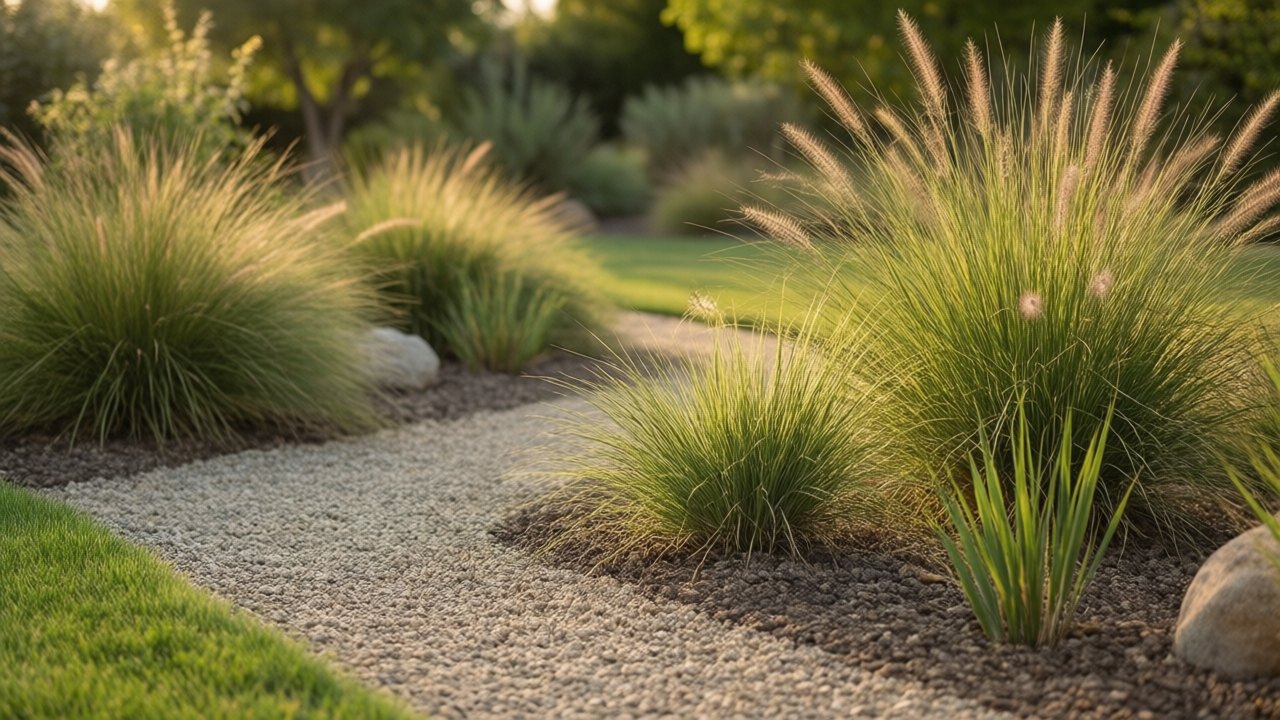
- Native or ornamental grasses, which move attractively and need little
- Planted beds with mulch
- Hardscape such as gravel, decomposed granite, or pavers for seating and paths
Mulch does more than look tidy
A two to three inch layer of mulch over planting beds retains soil moisture, moderates soil temperature, suppresses weed germination, and breaks down into organic matter over time.
Keep it pulled back a few inches from trunks and stems. Mulch piled against bark holds moisture against it and invites rot and pests, which is the most common mulching error.
Irrigation that does not waste
- Drip irrigation delivers water at the root zone with minimal evaporation, and suits beds far better than spray.
- Water deeply and less often, which encourages roots to grow downward. Frequent shallow watering produces shallow roots and plants that suffer immediately when watering stops.
- Water early morning, when evaporation is lowest and foliage dries during the day, reducing disease.
- Add a rain sensor or smart controller so the system does not run during or after rainfall, a simple change that eliminates the most visible kind of waste.
- Inspect the system seasonally for broken heads, misdirected spray, and leaks, which are easy to miss and expensive over a season.
Trees are the long-term investment
A well-placed shade tree reduces cooling load, and the effect grows for decades. Place deciduous trees where they shade west and south-facing walls and windows in summer, then drop their leaves and admit sun in winter.
Consider mature size at planting rather than nursery size. Trees planted too close to foundations, walkways, and utility lines create problems that surface years later, when correction is expensive.
Reducing the annual work
- Choose plants that reach their intended size naturally rather than requiring constant pruning to stay in bounds.
- Use edging to keep beds and lawn separate, which eliminates a recurring trimming chore.
- Accept some imperfection. A landscape held to a rigid standard demands constant intervention, while one allowed to look slightly natural largely maintains itself.
The first two years matter most
Even drought-tolerant plants need regular water while establishing roots. The low-maintenance yard is a destination, not a starting condition. Plan on attentive watering through the first couple of seasons, then taper as plants take hold.
Article Was Generated By AI.