Water Heaters: Tank, Tankless, and Heat Pump Compared
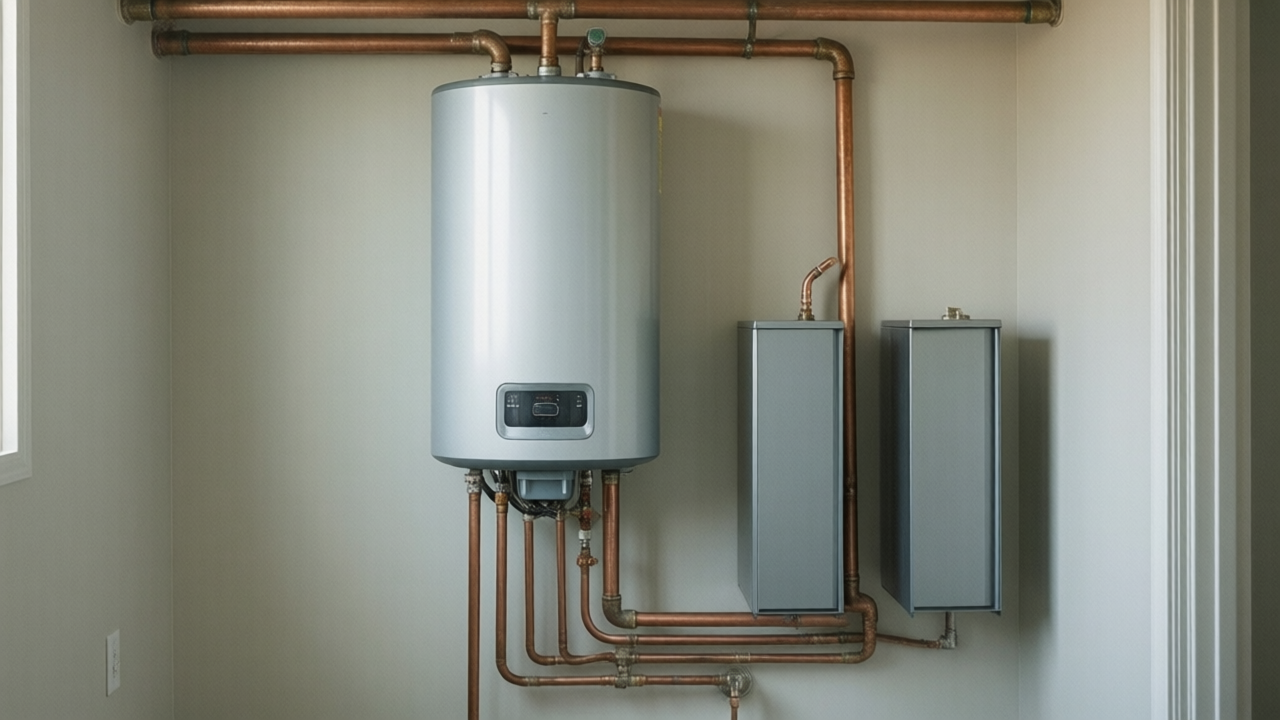
Water heating is a large share of a home's energy use, and the decision usually gets made in an emergency when the old unit fails. Making it in advance produces a better outcome.
Conventional tank heaters
A tank keeps a reservoir of water hot continuously. They are inexpensive to buy and simple to install, which is why they remain the default.
- Lower upfront cost than the alternatives.
- Simple, widely understood service.
- Standby losses, since the tank reheats to hold temperature whether or not anyone uses hot water.
- Finite delivery. Once the tank is exhausted, you wait for recovery.
- Typical service life in the range of eight to twelve years.
Tankless heaters
A tankless unit heats water on demand as it flows, with no storage.
- No standby loss, which improves efficiency, particularly in households using modest amounts of hot water.
- Endless supply for sequential use, which is the feature people notice most.
- Compact, freeing floor space.
- Higher upfront cost, often substantially, and installation frequently requires gas line or electrical upgrades and new venting.
- Flow limits are real. A tankless unit heats only so many gallons per minute, so simultaneous demands can exceed capacity if the unit is undersized.
- Longer service life, often approaching twenty years.
Heat pump water heaters
These move heat from surrounding air into the water rather than generating heat directly, which makes them dramatically more efficient than conventional electric resistance heaters.
- The lowest operating cost of the three in most electric households.
- Frequently eligible for utility rebates and efficiency incentives, which changes the math considerably.
- Higher upfront cost than a standard tank.
- They need air volume around them and work best in a space that stays reasonably warm. A tight, cold closet is a poor location.
- They cool and dehumidify the surrounding space, which is a benefit in a warm basement and a drawback in a conditioned living area.
- They produce some noise, comparable to a window air conditioner.
Sizing matters more than type
An undersized unit of any type produces an unsatisfying result. For tanks, size by first-hour rating rather than gallons alone. For tankless, size by required flow rate and by incoming water temperature, since colder groundwater in winter reduces capacity meaningfully.
The honest comparison
For a small household with modest hot water use, a heat pump unit usually wins on total cost of ownership where the space suits it. For a large household with simultaneous demands, a properly sized tankless or a large conventional tank is more practical. For a rental or a house being sold soon, a conventional tank is the rational choice, since the payback period on the efficient options exceeds the holding period.
Maintenance that extends life
Regardless of type, a few habits matter. Drain and flush the tank annually to remove sediment, which shortens life and reduces efficiency. Check the anode rod every few years on a tank unit, since replacing a depleted rod is far cheaper than replacing a corroded tank. Descale a tankless unit on the manufacturer's schedule, especially in hard water. Test the temperature and pressure relief valve annually.
Before it fails
Note the manufacture date on the current unit. If it is beyond eight years, start deciding now. The choice made calmly on a Saturday is almost always better than the one made on a Tuesday night with water on the floor.
Article Was Generated By AI.